

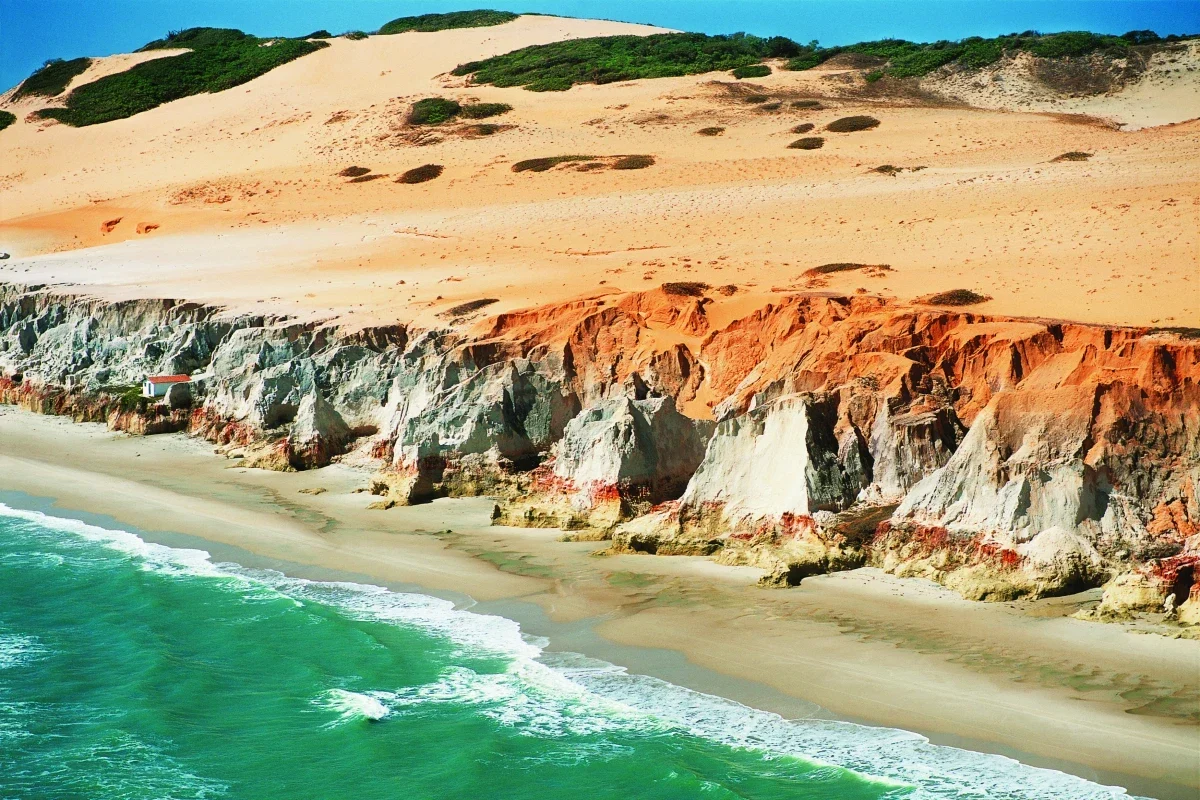
When international travelers picture Brazil, they often imagine endless stretches of golden sand, palm trees, and warm Atlantic waters. Yet the Brazil Coast is more diverse than the traditional tropical postcard suggests, with cliffs, rock formations, dunes, and unusual geological landscapes found along its vast shoreline.
Exploring these destinations reveals a different side of the country’s coastline, particularly in Paraíba and Ceará, where dramatic natural formations take center stage. From colorful cliffs and stone arches to unusual rock formations, these five beaches offer landscapes far removed from the usual Brazilian seaside scenery.
1. Praia do Amor
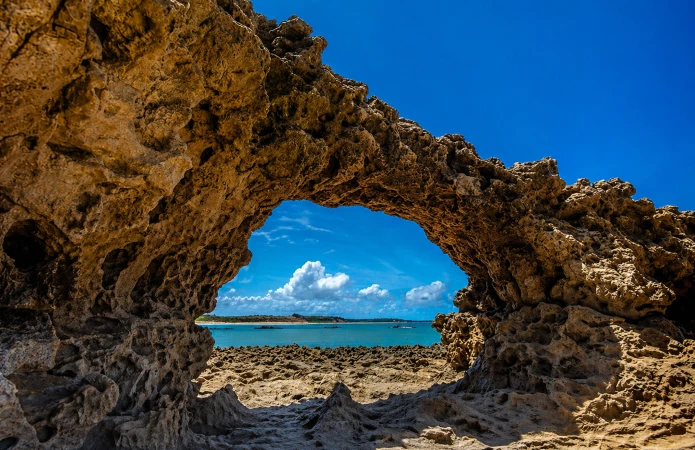
On a scenic stretch of the coast of Conde, Paraíba, Praia do Amor is surrounded by tropical vegetation, coconut trees, and coastal rock formations. The beach has a quieter setting and is known for an unusual geological feature that gives the shoreline a distinctive appearance.
What stands out: A natural rock arch is the main feature of Praia do Amor, forming an opening in the coastal rock near the water. Combined with the surrounding cliffs, vegetation, and Atlantic waters, the formation creates a landscape that looks very different from the usual image of a Brazilian beach.
2. Praia de Coqueirinho
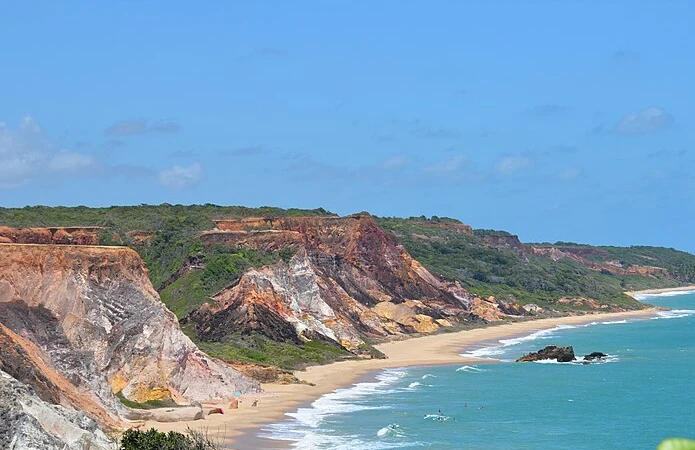
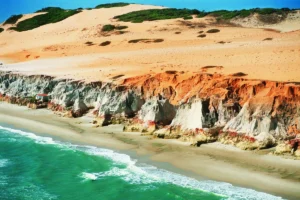
Colorful cliffs, coconut groves, and clear Atlantic waters define Praia de Coqueirinho, on the coast of Conde, Paraíba. The beach combines tropical vegetation with large geological formations that rise directly beside the shoreline, creating a landscape with much more than the usual sand and sea.
What stands out: The massive cliffs surrounding the beach display shades of red, gold, and white, creating a dramatic backdrop along the coast. Their changing colors under the sunlight give Coqueirinho a distinctive appearance that sets it apart from more conventional Brazilian beaches.
3. Praia de Tambaba
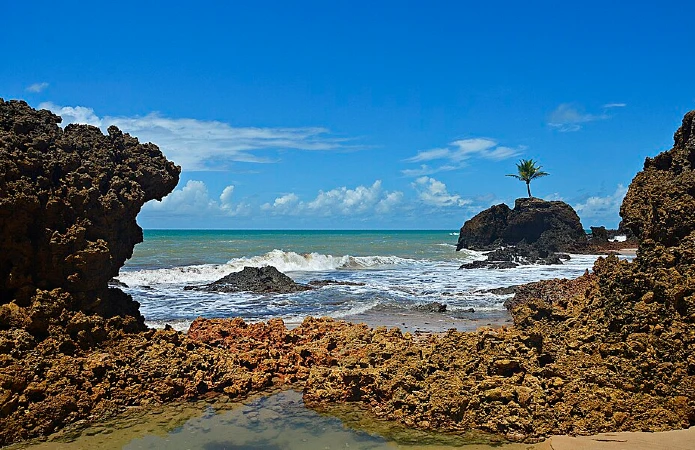
Surrounded by native vegetation, cliffs, and clear waters, Praia de Tambaba sits on the coast of Conde, in Paraíba, just south of Coqueirinho. The beach is also known for its officially regulated naturist section, while other areas remain open to conventional beach use.
What stands out: The combination of colorful cliffs, rock formations, and small sheltered stretches of sand gives Tambaba a distinctive landscape. Dark rocks contrast with the reddish and lighter tones of the surrounding cliffs, while the area’s natural vegetation adds another layer to the scenery.
(You also: Salvador: A Destination at the Heart of Culture in Brazil)
4. Praia da Pedra Furada
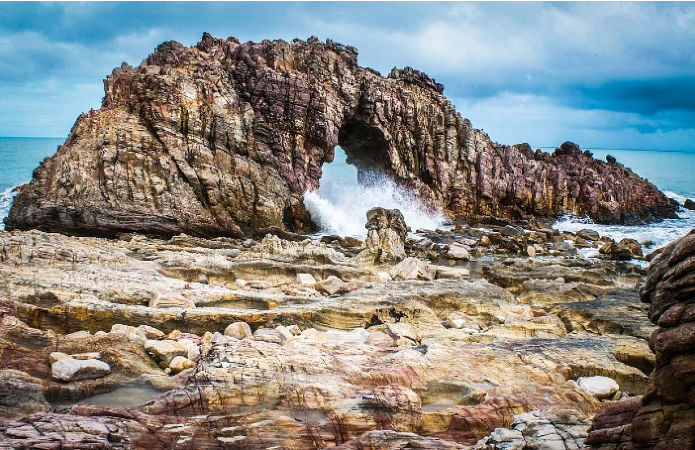
Part of the coastal landscape of Jericoacoara, Ceará, Praia da Pedra Furada is shaped by wind, sand, and rocky formations. The site can be reached from the main village by a coastal walk, with the route passing through rocky terrain and offering views of the Atlantic along the way.
What stands out: The natural stone arch known as Pedra Furada is the beach’s main landmark, rising directly from the coastal rocks. Waves pass beneath the opening, creating a distinctive natural frame that has become one of the best-known sights along this section of the Brazil Coast.
5. Praia do Morro Branco
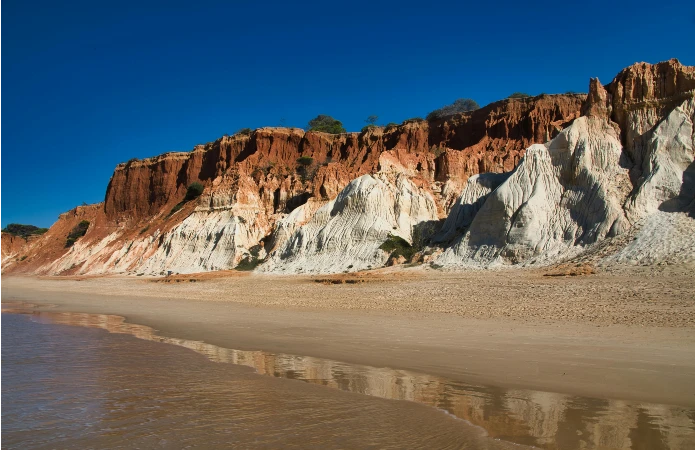
Wind and erosion have shaped the landscape around Praia do Morro Branco, in the municipality of Beberibe, Ceará. The coastline changes from low vegetation to a complex formation of cliffs and narrow passages, creating a striking transition between the land and the Atlantic Ocean.
What stands out: The maze of colored sand cliffs is the defining feature of Morro Branco, with shades ranging from red and yellow to white. These formations create narrow paths and canyon-like passages beside the beach, producing a landscape that looks far removed from the usual image of a Brazilian tropical shoreline.