

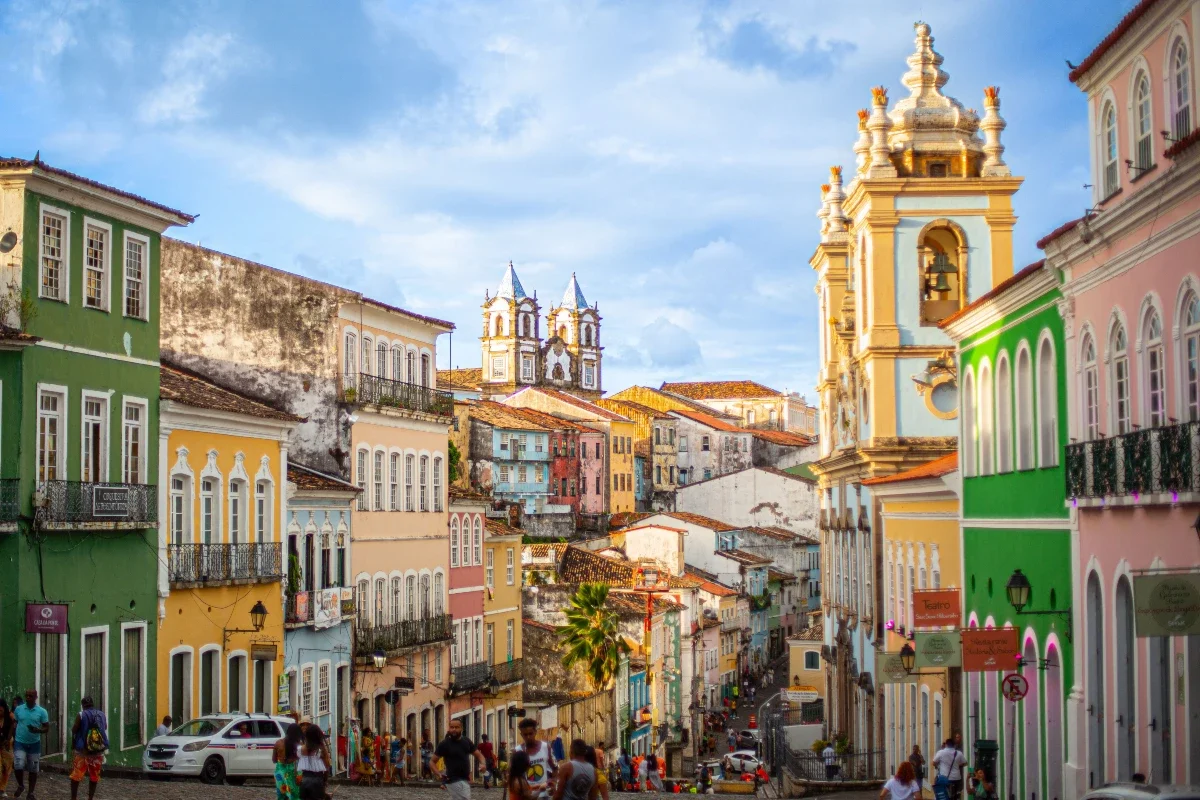
Salvador is one of the most distinctive cities in Brazil, where colonial architecture, Atlantic beaches, music, food, and centuries of cultural influences come together. As the capital of Bahia, the city offers visitors a chance to experience historic landmarks, vibrant traditions, and landscapes that reveal different sides of Brazilian identity.
From the historic center to the shores of the Atlantic and the islands of Todos-os-Santos Bay, Salvador is a destination where history and everyday life remain closely connected. Exploring its streets, beaches, traditions, and flavors is one of the best ways to understand the richness of culture in Brazil.
Elevador Lacerda and the View Across the Bay
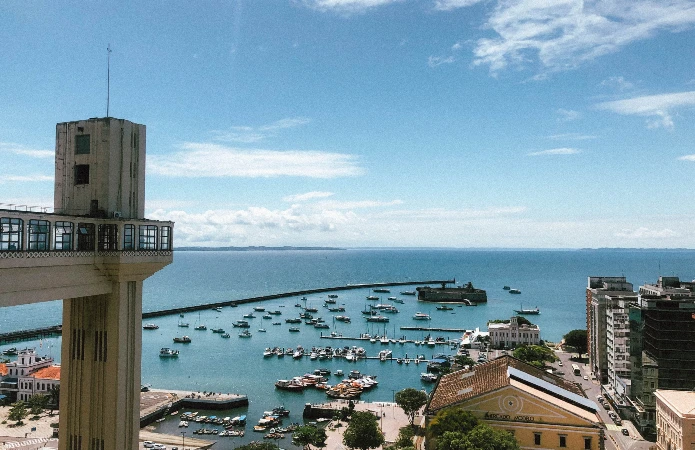
Few views introduce Salvador as effectively as the one surrounding the Elevador Lacerda. Connecting the Upper and Lower City, the historic elevator stands above Todos-os-Santos Bay and offers a striking perspective over the waterfront, the Mercado Modelo, and the Forte de São Marcelo.
The scene brings together some of the city’s most recognizable landmarks in a single panorama. For visitors arriving in Salvador for the first time, it is also an ideal introduction to the unusual geography of a city built between hills, historic streets, and the Atlantic coast.
Farol da Barra and the Atlantic Coast
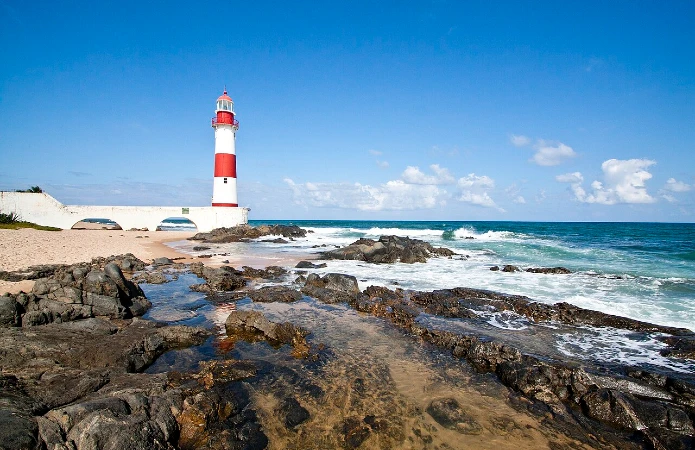
At the meeting point of the Atlantic Ocean and the entrance to Todos-os-Santos Bay, the Farol da Barra is one of Salvador’s most recognizable landmarks. The lighthouse stands within the historic Forte de Santo Antônio da Barra and has watched over the coast for centuries.
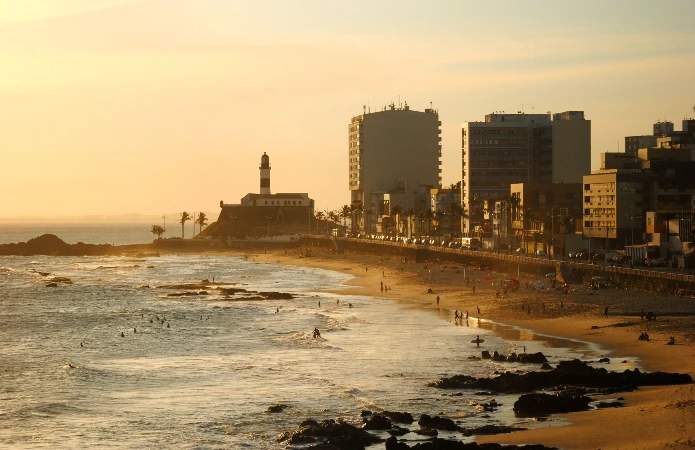
Around it, Praia da Barra adds a completely different atmosphere, with people enjoying the water, walking along the shore, and gathering to watch the sunset. The combination of the lighthouse, beach, and ocean makes this one of the city’s most memorable coastal settings.
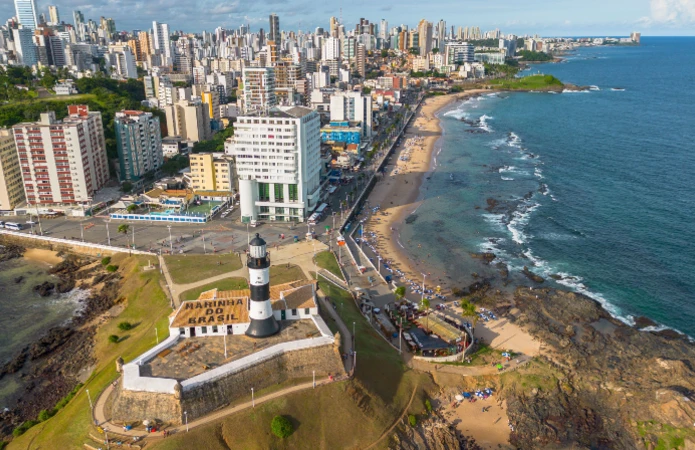
From the area around the lighthouse, the coastline reveals the scale of Salvador and its relationship with the sea. As the sun begins to set, the warm light transforms the beach and the historic fort into one of the city’s most photographed scenes.
For travelers, the area is more than a postcard. It is a place where Salvador’s history, coastline, and everyday life meet, making the Farol da Barra one of the essential stops for anyone discovering the city.
Itapuã: Where Beach and Brazilian Culture Meet
Farther along Salvador’s coastline, Itapuã offers a more relaxed atmosphere and a strong connection with Brazilian music and poetry. Its beaches, palm trees, and traditional neighborhood life have helped make the area part of the cultural imagination far beyond Bahia.
Itapuã became particularly associated with Brazilian artists and songs, giving the neighborhood an identity that goes beyond its scenery. Visiting the area allows travelers to experience a quieter side of Salvador while discovering a place deeply connected to the country’s artistic traditions.
Pelourinho and Salvador’s Colonial Heritage
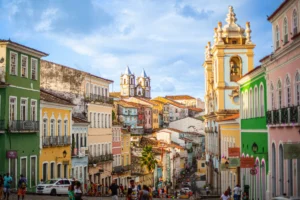
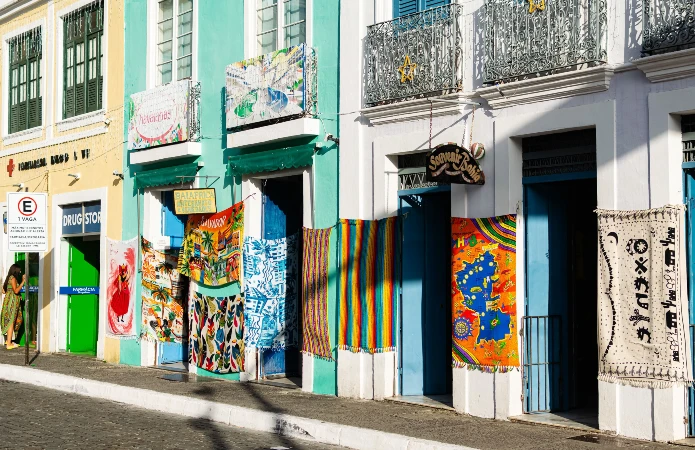
The colorful streets of Pelourinho reveal another side of Salvador. Located in the city’s historic center, the neighborhood is known for its colonial buildings, churches, cobblestone streets, and richly decorated facades that reflect centuries of Brazilian history.
Walking through the area, visitors encounter architecture, music, art, shops, and cultural traditions within a remarkably compact setting. Pelourinho is not simply a preserved historic district; it remains one of the places where Salvador’s past and present can be experienced together.
(See also: 7 Famous Landscapes in Brazil You Need to See in Your Lifetime)
Capoeira and Carnival: The Rhythm of Salvador
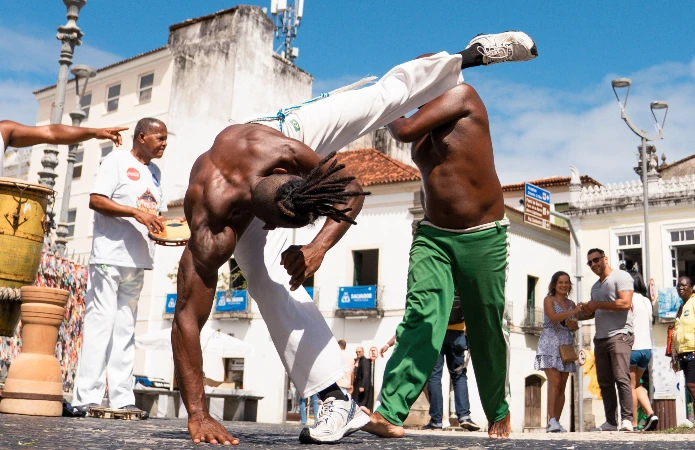
Salvador’s culture is also expressed through movement and music, and few traditions illustrate this better than capoeira. Combining martial arts, dance, music, and ritual, the practice has deep roots in Afro-Brazilian history and became an important part of Brazil’s cultural heritage.
For visitors, watching a capoeira roda offers a very different experience from simply seeing a historic monument. The music, movements, instruments, and interaction between participants create a living cultural experience that connects Salvador with a much broader Brazilian tradition.
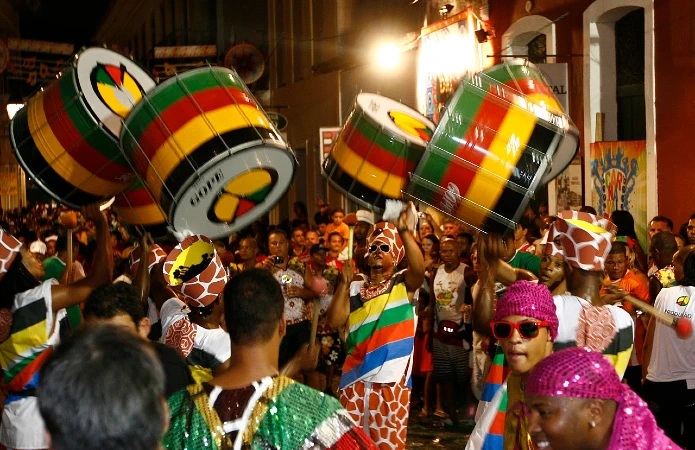
The city’s Carnival brings another expression of this identity to the streets. Massive crowds, live music, blocos, and performers transform Salvador into one of Brazil’s most energetic destinations during the festivities.
Among the city’s best-known cultural symbols is Olodum, whose drummers and performances have become closely associated with Salvador’s Afro-Brazilian cultural identity. Seeing the group performing among the crowds gives visitors a sense of the scale and energy that define the city’s Carnival.
Bahian Cuisine: A Taste of Salvador
Food is another essential part of the Salvador experience. Bahian cuisine combines Indigenous, African, and Portuguese influences, creating dishes known for bold flavors, seafood, spices, and ingredients that have become symbols of the region.
Acarajé is perhaps the most recognizable example. Traditionally prepared from black-eyed peas and fried in dendê oil, the dish is commonly served with fillings and sauces and is closely connected to the tradition of the baianas do acarajé, the women who traditionally prepare and sell it. Other classics, including moqueca and vatapá, reveal different aspects of Bahia’s culinary heritage.
For travelers, discovering these dishes is not only about trying new flavors but also about experiencing a part of the history and traditions that shaped Salvador. A meal in the city can therefore become part of the journey itself, turning local ingredients and traditional recipes into another way of discovering its identity.

Ilha dos Frades: A Quiet Escape from Salvador
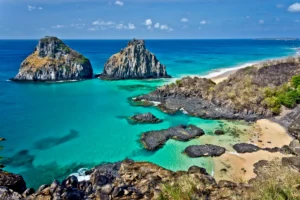
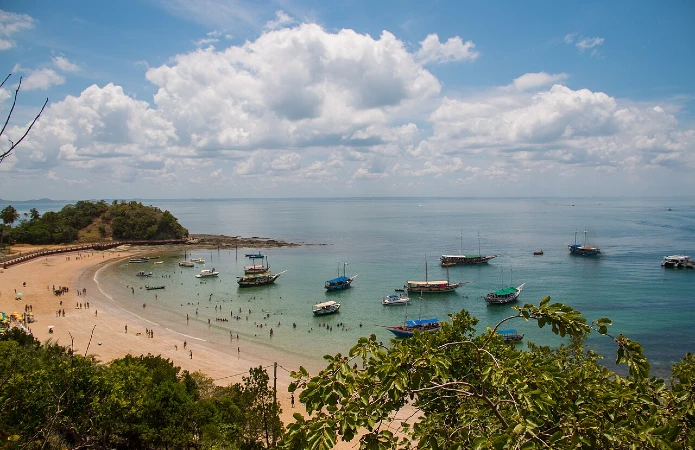
After the movement of the city, the Ilha dos Frades offers a quieter experience within Todos-os-Santos Bay. Surrounded by clear waters, beaches, and vegetation, the island provides a striking contrast to Salvador’s historic center and busy coastline.
The island also preserves historic landmarks such as the Church of Nossa Senhora do Loreto, adding another layer to the landscape. For travelers looking for a slower final experience, Ilha dos Frades brings together nature, history, and the peaceful atmosphere of an island just beyond the city.
Discovering Culture in Brazil Through Salvador
Salvador ultimately reveals itself through many different experiences: historic streets, ocean views, music, capoeira, Carnival, and the flavors of Bahia. Together, these places and traditions offer travelers an engaging introduction to culture in Brazil, showing why Salvador remains one of the country’s most distinctive destinations.