



Home Travel Animals of Brazil: 10 Images That Show the Country’s Incredible Wildlife

Animals of Brazil: 10 Images That Show the Country’s Incredible Wildlife

Meet 10 fascinating Animals of Brazil and discover the incredible wildlife that reveals one of the greatest biodiversities on the planet.

Share this article

Brazil is one of the most biodiverse countries in the world, with an extraordinary variety of landscapes and wildlife. From the vast Amazon rainforest to the wetlands of the Pantanal and the forests of the Atlantic coast, the country provides habitats for countless species. These animals reflect the remarkable diversity found across its vast territory.

Exploring these diverse ecosystems reveals a remarkable variety of animals of Brazil, each adapted to the country’s distinct landscapes. Jaguars move through forests and wetlands, colorful birds fill the treetops, while unusual mammals and reptiles thrive across grasslands, rivers, and flooded plains. Together, these ten images offer a visual journey through some of Brazil’s most distinctive native species.

1. Jaguar, The Power of Wild Landscapes
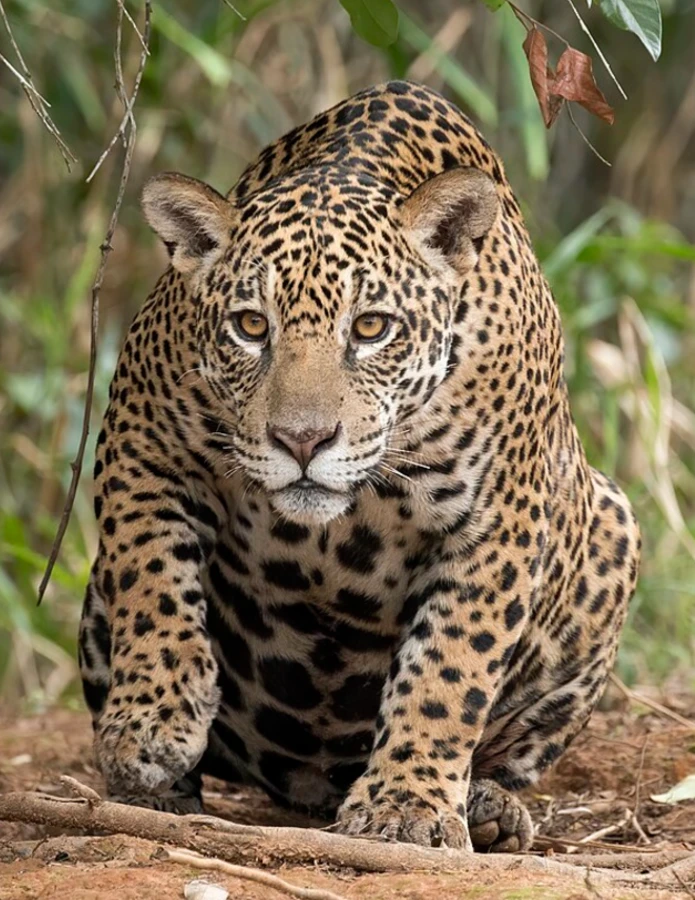
The jaguar is one of the most powerful and recognizable animals of Brazil.

Jaguar (Panthera onca). Charles J. Sharp/ Wikimedia Commons

The jaguar is one of the most powerful and recognizable animals in the country. Its muscular body, distinctive rosettes, and intense gaze make it an unmistakable symbol of wild landscapes. Found across several ecosystems, the species can move through forests, riverbanks, and wetlands in search of prey. Its presence in the wild also highlights the importance of protecting the natural habitats where it still survives.

2. Red-and-Green Macaw, A Burst of Color in the Canopy
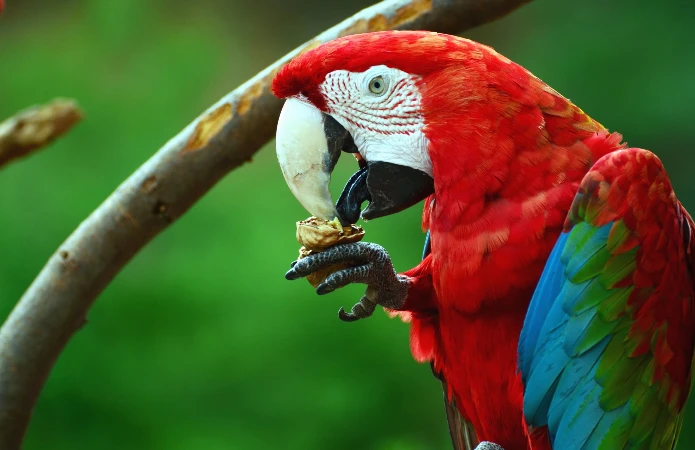
With its vivid red plumage and flashes of blue and green, the red-and-green macaw brings some of the most striking colors of tropical wildlife into the forest canopy

Red-and-Green Macaw (Ara chloropterus). Congerdesign/ Pixnio

With its vivid red plumage and flashes of blue and green, the red-and-green macaw brings some of the most striking colors of tropical wildlife into the forest canopy. Its large, curved bill and powerful wings give it an unmistakable silhouette as it moves between trees in search of fruit, seeds, and other foods. Few birds capture the visual richness of the country’s forests quite so immediately.

3. Golden Lion Tamarin, The Golden Primate
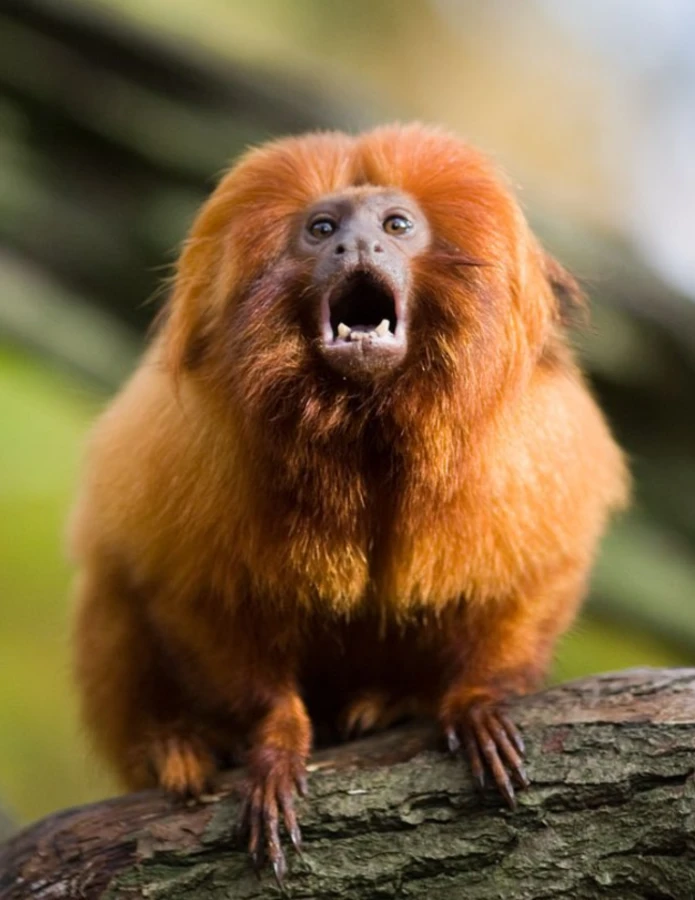
the golden lion tamarin is one of the country's most distinctive mammals.

Golden Lion Tamarin (Leontopithecus rosalia). Jeroen Kransen/ Wikimedia Commons

Named for its bright golden-orange fur and mane-like appearance around the face, the golden lion tamarin is one of the country’s most distinctive mammals. Endemic to the Atlantic Forest, it lives in forest fragments in the southeast, where habitat loss has made conservation especially important. Its striking appearance has also made it an international symbol of wildlife conservation.

4. Capybara, The Animal Everyone Recognizes
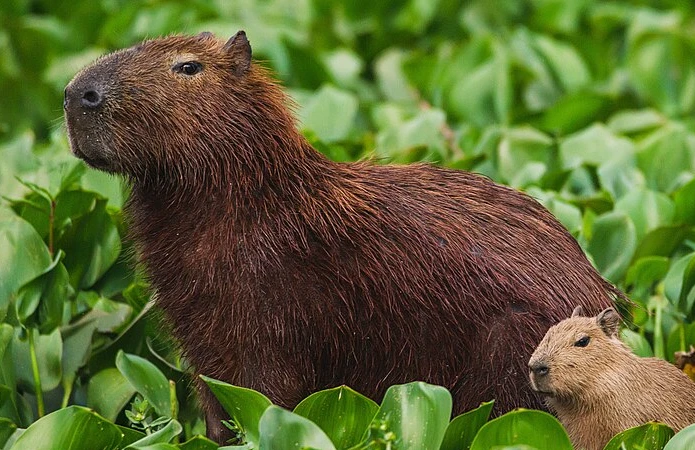
Capybaras often rest in groups near the water

Capybara (Hydrochoerus hydrochaeris). Clodomiro Esteves Junior/ Wikimedia Commons

The world’s largest living rodent is closely associated with rivers, lakes, marshes, and flooded landscapes. Capybaras often rest in groups near the water, where their calm behavior creates some of the most recognizable scenes in the country’s wildlife. Their social nature and distinctive appearance have made them especially popular subjects for photographs.

5. West Indian Manatee, A Gentle Giant Beneath the Water
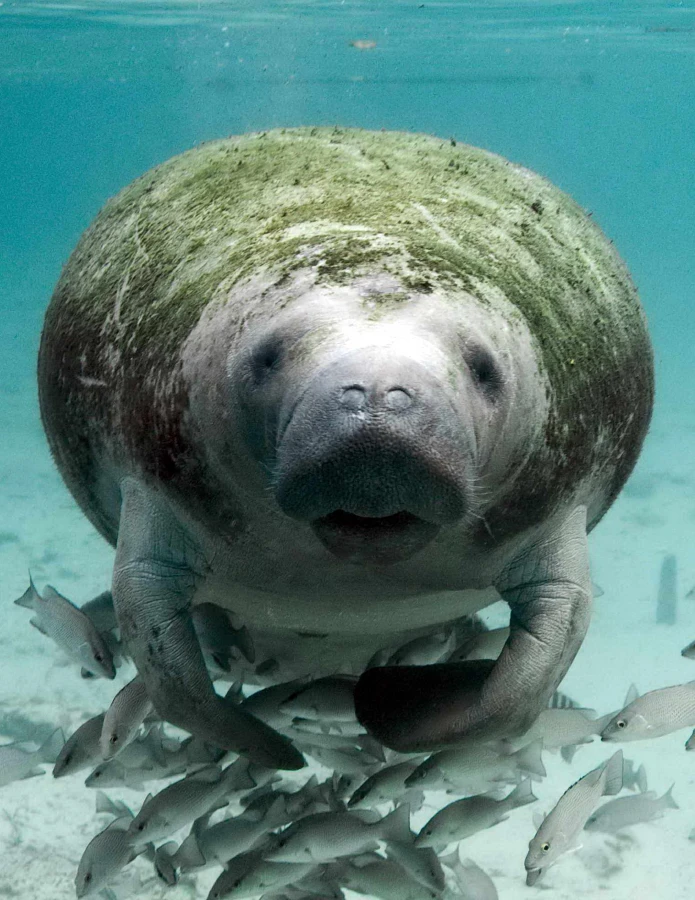
The West Indian manatee is a peaceful herbivore found in shallow coastal waters, estuaries

West Indian Manatee (Trichechus manatus). Ramos Keith/ Pixnio

The West Indian manatee is a peaceful herbivore found in shallow coastal waters, estuaries, and river mouths along parts of the northeastern coast. Its rounded body, whiskered face, and paddle-shaped tail give it a distinctive appearance, especially when seen underwater. The species also represents the rich but fragile wildlife found along coastal and aquatic environments.

(You also: 5 Beaches on the Brazil Coast That Look Nothing Like the Usual)

6. Toco Toucan, The Iconic Beak of the Forest
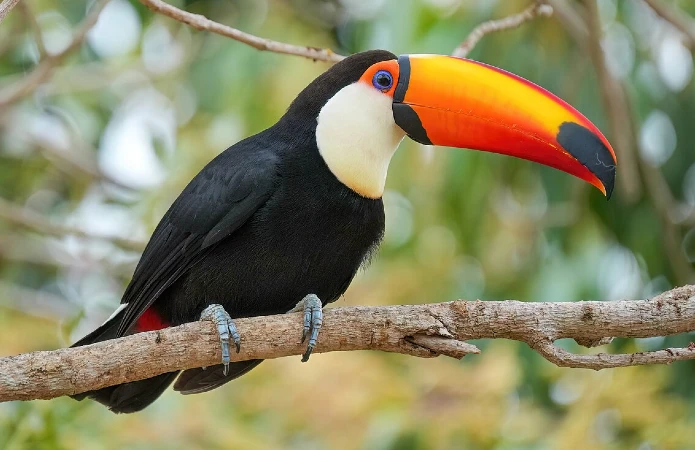
The toco toucan is instantly recognizable by its enormous orange-and-black bill

Toco Toucan (Ramphastos toco). Giles Laurent/ Wikimedia Commons

The toco toucan is instantly recognizable by its enormous orange-and-black bill, which creates a striking contrast with its black body and the green vegetation around it. Often seen perched among trees, it uses its bill to reach and handle fruit while its loud calls carry through the canopy. Its unusual combination of color and shape makes it one of the most visually distinctive birds of the country.

7. Maned Wolf, A Different Face of the Cerrado
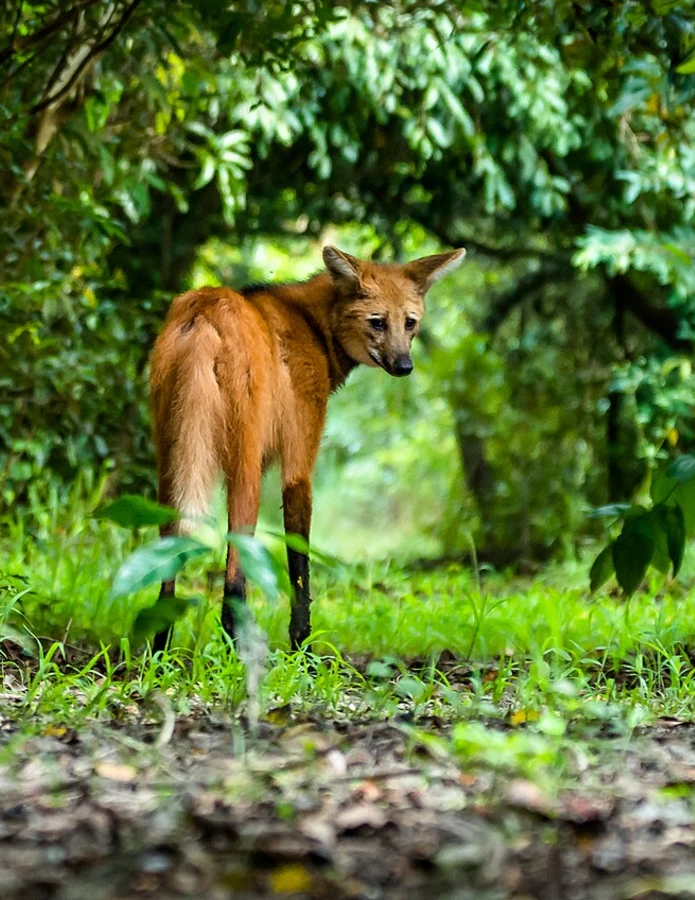
the maned wolf represents the distinctive wildlife

Maned Wolf (Chrysocyon brachyurus). Clodomiro Esteves Junior/ Wikimedia Commons

With extremely long legs, reddish-golden fur, and a dark mane along its back, the maned wolf has one of the most unusual silhouettes in South American wildlife. It is the largest canid on the continent and is closely associated with the open landscapes of the Cerrado. Unlike animals commonly linked to dense forests, the maned wolf represents the distinctive wildlife of grasslands and savanna-like environments.

8. Sloth, Life Moves Slowly in the Forest
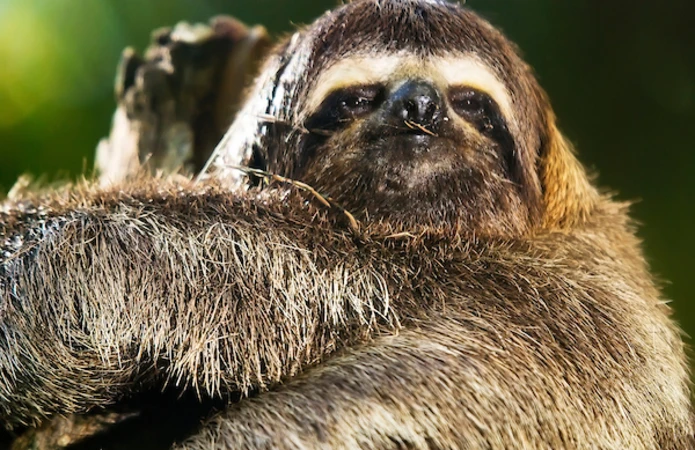
Sloths spend much of their lives suspended from branches

Sloth (Bradypus variegatus). Últimos Refúgios Institute/ Wikimedia Commons

Sloths spend much of their lives suspended from branches, moving slowly through the canopy while feeding mainly on leaves. Their coarse fur can host algae, sometimes giving them a greenish appearance that helps them blend into the surrounding vegetation. Their unusual lifestyle and relaxed movements make them among the most recognizable mammals of tropical forests.

9. Yellow Anaconda, The Colossus of the Wetlands
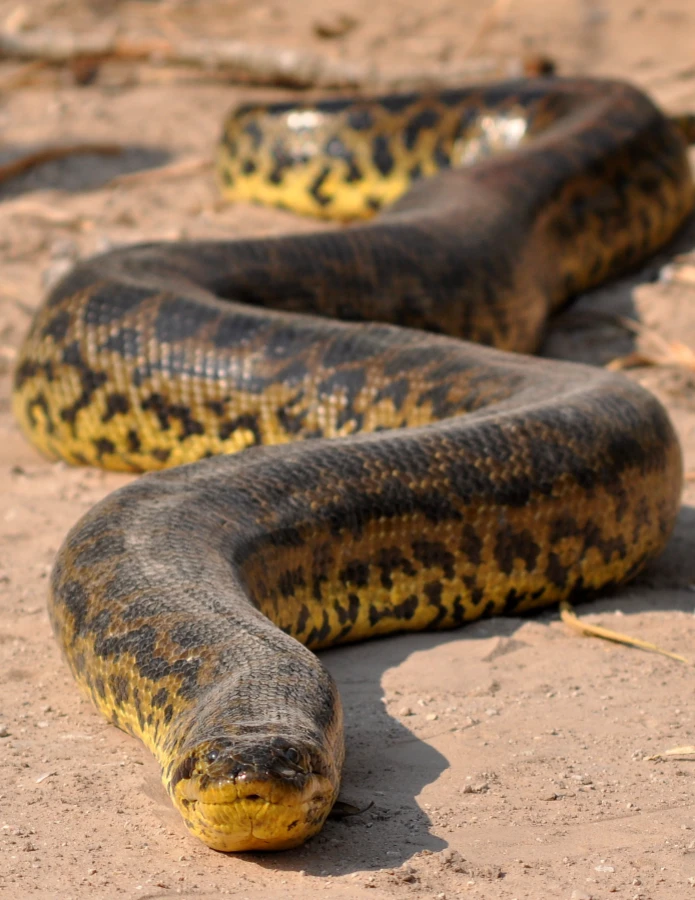
The yellow anaconda is closely adapted to wetlands

Yellow Anaconda (Eunectes notaeus). Diana Padrón/ Flickr

The yellow anaconda is closely adapted to wetlands, marshes, and slow-moving waters, where its powerful body allows it to move with ease. Its yellowish coloration and dark markings create a distinctive pattern that helps it blend into its surroundings. Its unusual appearance adds another striking form to the remarkable variety of wildlife found in these aquatic environments.

10. Yacare Caiman, A Final Glimpse of the Wild
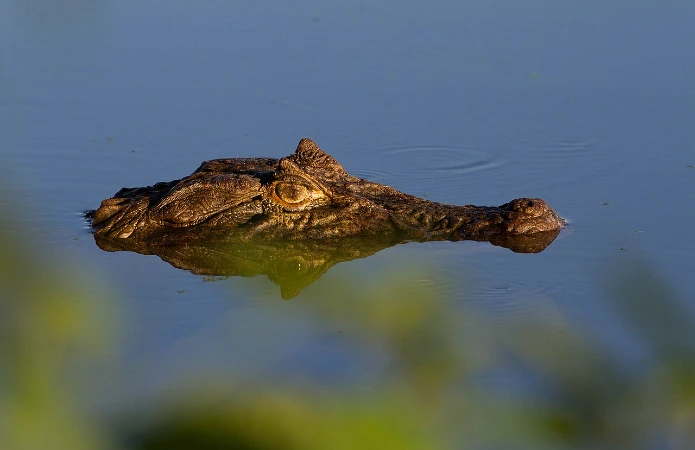
Yacare caiman is a familiar predator of the Pantanal

Yacare Caiman (Caiman yacare). A marijose/ Wikimedia Commons

Often seen resting along muddy riverbanks or moving quietly through shallow waters, the Yacare caiman is a familiar predator of the Pantanal and other wetland environments. Its rugged appearance reflects the character of these aquatic ecosystems and provides a fitting final image for this journey through the animals of Brazil.

Get interesting content about Brazil on social media! Just follow our official Instagram and Facebook pages.

Enjoyed this article? Click on to discover more about Brazil and uncover more stories, places, and experiences from this fascinating country.

Home Travel Animals of Brazil: 10 Images That Show the Country’s Incredible Wildlife

Animals of Brazil: 10 Images That Show the Country’s Incredible Wildlife

Meet 10 fascinating Animals of Brazil and discover the incredible wildlife that reveals one of the greatest biodiversities on the planet.

Share this article

Jaguar
Leonardo Ramos/ Wikimedia Commons

Brazil is one of the most biodiverse countries in the world, with an extraordinary variety of landscapes and wildlife. From the vast Amazon rainforest to the wetlands of the Pantanal and the forests of the Atlantic coast, the country provides habitats for countless species. These animals reflect the remarkable diversity found across its vast territory.

Exploring these diverse ecosystems reveals a remarkable variety of animals of Brazil, each adapted to the country’s distinct landscapes. Jaguars move through forests and wetlands, colorful birds fill the treetops, while unusual mammals and reptiles thrive across grasslands, rivers, and flooded plains. Together, these ten images offer a visual journey through some of Brazil’s most distinctive native species.

1. Jaguar, The Power of Wild Landscapes

The jaguar is one of the most powerful and recognizable animals of Brazil.

Jaguar (Panthera onca). Charles J. Sharp/ Wikimedia Commons

The jaguar is one of the most powerful and recognizable animals in the country. Its muscular body, distinctive rosettes, and intense gaze make it an unmistakable symbol of wild landscapes. Found across several ecosystems, the species can move through forests, riverbanks, and wetlands in search of prey. Its presence in the wild also highlights the importance of protecting the natural habitats where it still survives.

2. Red-and-Green Macaw, A Burst of Color in the Canopy

With its vivid red plumage and flashes of blue and green, the red-and-green macaw brings some of the most striking colors of tropical wildlife into the forest canopy

Red-and-Green Macaw (Ara chloropterus). Congerdesign/ Pixnio

With its vivid red plumage and flashes of blue and green, the red-and-green macaw brings some of the most striking colors of tropical wildlife into the forest canopy. Its large, curved bill and powerful wings give it an unmistakable silhouette as it moves between trees in search of fruit, seeds, and other foods. Few birds capture the visual richness of the country’s forests quite so immediately.

3. Golden Lion Tamarin, The Golden Primate

the golden lion tamarin is one of the country's most distinctive mammals.

Golden Lion Tamarin (Leontopithecus rosalia). Jeroen Kransen/ Wikimedia Commons

Named for its bright golden-orange fur and mane-like appearance around the face, the golden lion tamarin is one of the country’s most distinctive mammals. Endemic to the Atlantic Forest, it lives in forest fragments in the southeast, where habitat loss has made conservation especially important. Its striking appearance has also made it an international symbol of wildlife conservation.

4. Capybara, The Animal Everyone Recognizes

Capybaras often rest in groups near the water

Capybara (Hydrochoerus hydrochaeris). Clodomiro Esteves Junior/ Wikimedia Commons

The world’s largest living rodent is closely associated with rivers, lakes, marshes, and flooded landscapes. Capybaras often rest in groups near the water, where their calm behavior creates some of the most recognizable scenes in the country’s wildlife. Their social nature and distinctive appearance have made them especially popular subjects for photographs.

5. West Indian Manatee, A Gentle Giant Beneath the Water

The West Indian manatee is a peaceful herbivore found in shallow coastal waters, estuaries

West Indian Manatee (Trichechus manatus). Ramos Keith/ Pixnio

The West Indian manatee is a peaceful herbivore found in shallow coastal waters, estuaries, and river mouths along parts of the northeastern coast. Its rounded body, whiskered face, and paddle-shaped tail give it a distinctive appearance, especially when seen underwater. The species also represents the rich but fragile wildlife found along coastal and aquatic environments.

(You also: 5 Beaches on the Brazil Coast That Look Nothing Like the Usual)

6. Toco Toucan, The Iconic Beak of the Forest

The toco toucan is instantly recognizable by its enormous orange-and-black bill

Toco Toucan (Ramphastos toco). Giles Laurent/ Wikimedia Commons

The toco toucan is instantly recognizable by its enormous orange-and-black bill, which creates a striking contrast with its black body and the green vegetation around it. Often seen perched among trees, it uses its bill to reach and handle fruit while its loud calls carry through the canopy. Its unusual combination of color and shape makes it one of the most visually distinctive birds of the country.

7. Maned Wolf, A Different Face of the Cerrado

the maned wolf represents the distinctive wildlife

Maned Wolf (Chrysocyon brachyurus). Clodomiro Esteves Junior/ Wikimedia Commons

With extremely long legs, reddish-golden fur, and a dark mane along its back, the maned wolf has one of the most unusual silhouettes in South American wildlife. It is the largest canid on the continent and is closely associated with the open landscapes of the Cerrado. Unlike animals commonly linked to dense forests, the maned wolf represents the distinctive wildlife of grasslands and savanna-like environments.

8. Sloth, Life Moves Slowly in the Forest

Sloths spend much of their lives suspended from branches

Sloth (Bradypus variegatus). Últimos Refúgios Institute/ Wikimedia Commons

Sloths spend much of their lives suspended from branches, moving slowly through the canopy while feeding mainly on leaves. Their coarse fur can host algae, sometimes giving them a greenish appearance that helps them blend into the surrounding vegetation. Their unusual lifestyle and relaxed movements make them among the most recognizable mammals of tropical forests.

9. Yellow Anaconda, The Colossus of the Wetlands

The yellow anaconda is closely adapted to wetlands

Yellow Anaconda (Eunectes notaeus). Diana Padrón/ Flickr

The yellow anaconda is closely adapted to wetlands, marshes, and slow-moving waters, where its powerful body allows it to move with ease. Its yellowish coloration and dark markings create a distinctive pattern that helps it blend into its surroundings. Its unusual appearance adds another striking form to the remarkable variety of wildlife found in these aquatic environments.

10. Yacare Caiman, A Final Glimpse of the Wild

Yacare caiman is a familiar predator of the Pantanal

Yacare Caiman (Caiman yacare). A marijose/ Wikimedia Commons

Often seen resting along muddy riverbanks or moving quietly through shallow waters, the Yacare caiman is a familiar predator of the Pantanal and other wetland environments. Its rugged appearance reflects the character of these aquatic ecosystems and provides a fitting final image for this journey through the animals of Brazil.

Get interesting content about Brazil on social media! Just follow our official Instagram and Facebook pages.

Enjoyed this article? Click on to discover more about Brazil and uncover more stories, places, and experiences from this fascinating country.

YOU MAY ALSO BE INTERESTED IN

____________