


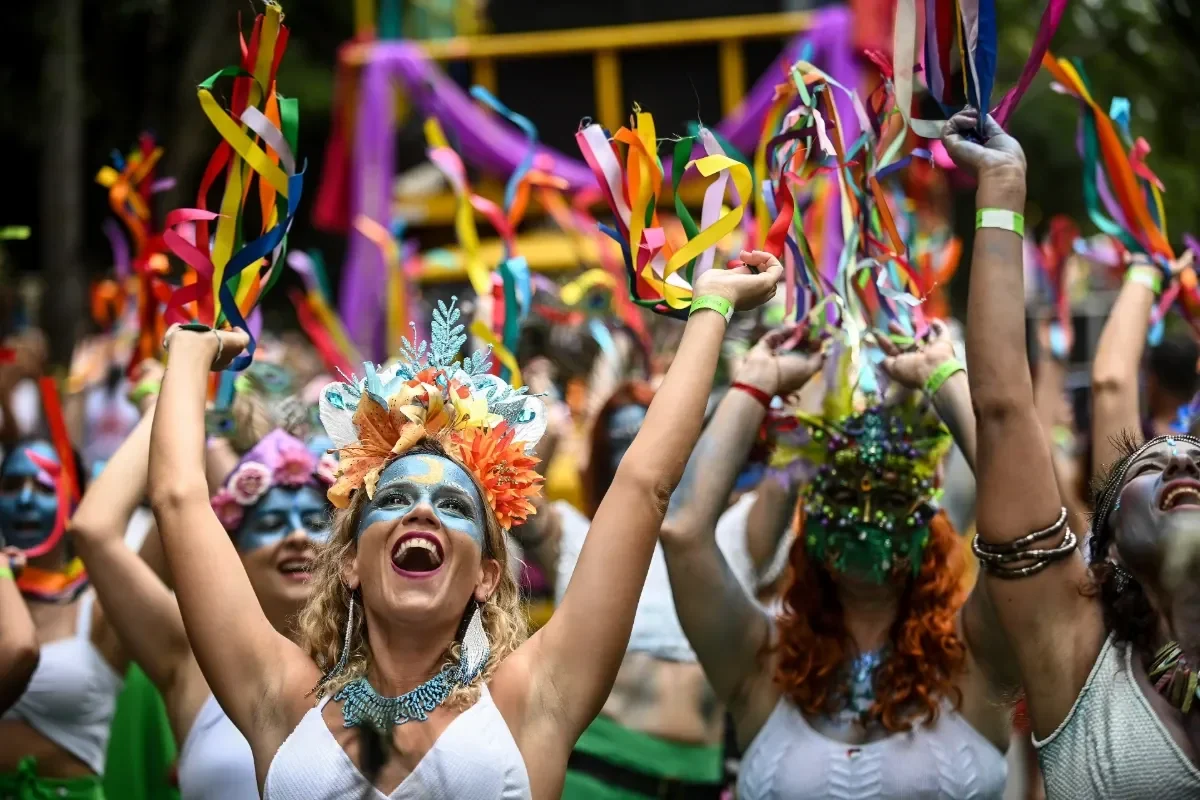
Brazil’s annual nationwide celebration is widely recognized as a vibrant reflection of the nation’s multicultural heritage, shaped by Indigenous traditions, European influences, and African heritage. Across the country, each region has its own rhythms, traditions, and ways of celebrating, creating a rich cultural landscape. So, what is Carnival like in Brazil?
Exploring these traditions reveals how Carnival has become a powerful symbol of national identity in South America’s largest country. This guide highlights four destinations that showcase the diversity of Brazilian Carnival through distinct rhythms, historical roots, and regional atmospheres.
Rio de Janeiro: Where Samba Takes Center Stage
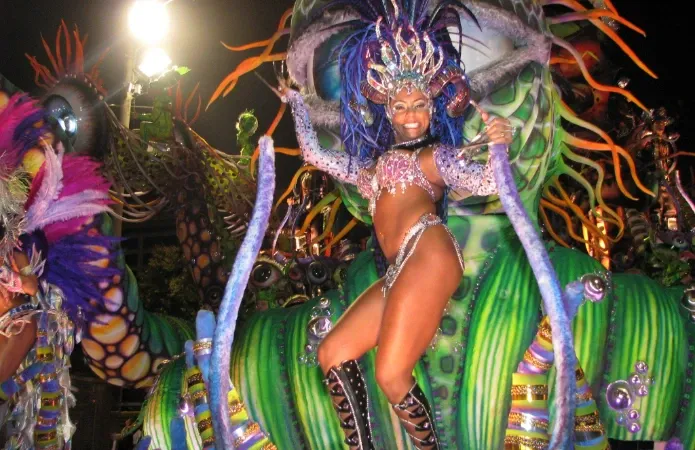
Rio de Janeiro represents the quintessential image of Brazilian Carnival, rooted in the tradition of samba schools and months of community preparation. In the weeks leading up to the celebration, neighborhoods across the city come alive with rehearsals that bring residents together.
The highlight comes at the legendary Sambadrome, designed by Oscar Niemeyer. Massive floats, elaborate costumes, powerful percussion sections known as baterias, and thousands of dancers transform the avenue into a spectacular theatrical performance.
Experiencing Rio Carnival means witnessing the energy of sambistas and dancers as they fill the avenue with music, movement, and color. The combination of samba, elaborate costumes, and the scale of the parade creates an unforgettable spectacle.
Salvador: Where Carnival Moves with the Trio Elétrico
Salvador offers a high-energy celebration in which the distinction between spectator and performer almost disappears. The capital of Bahia turns its streets into massive Carnival circuits where music, dancing, and Afro-Bahian traditions take center stage.
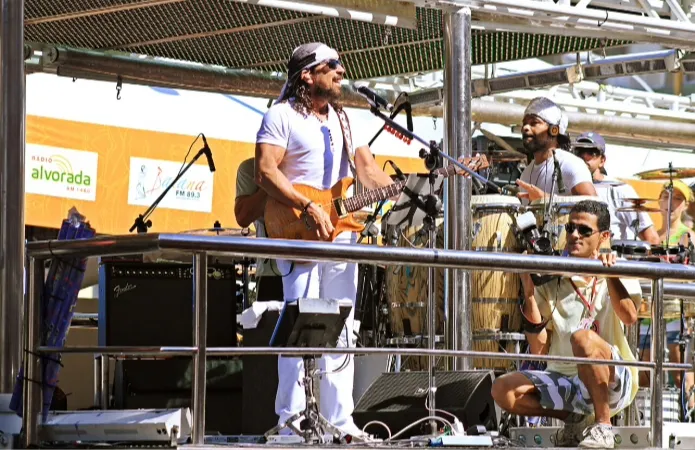
The pulsing heart of the celebration is the trio elétrico—massive trucks equipped with powerful sound systems and stages where artists and bands perform live. These mobile stages move slowly through the city’s main avenues, turning the streets into huge open-air concerts filled with music, dancing, and thousands of revelers.
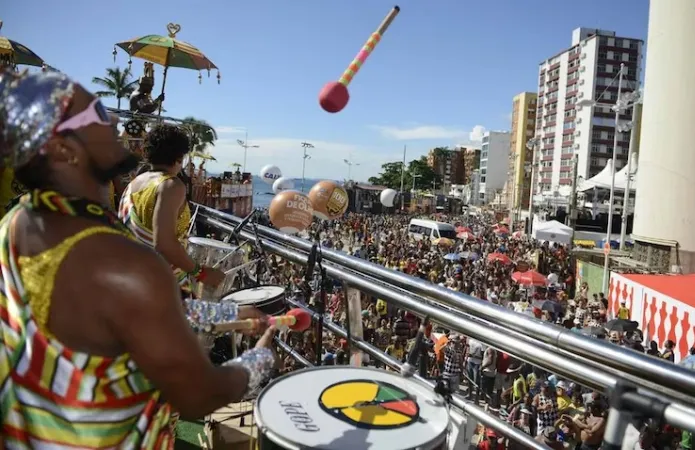
Closely associated with the development of axé music, trio elétricos have become one of the defining symbols of Salvador’s Carnival. Crowds follow the performers along the route, either inside organized blocos or freely as pipoca, creating a celebration where the distance between artist and audience almost disappears.
Taking part in Salvador’s Carnival means moving with the crowd, surrounded by percussion, music, and the energy of the city. The combination of Afro-Bahian heritage, axé music, live performances, and open-air celebration creates a unique Carnival experience.
(See also: Edson Gomes: The Legend of Reggae in Brazil)
São Paulo: Where Carnival Takes Over the City
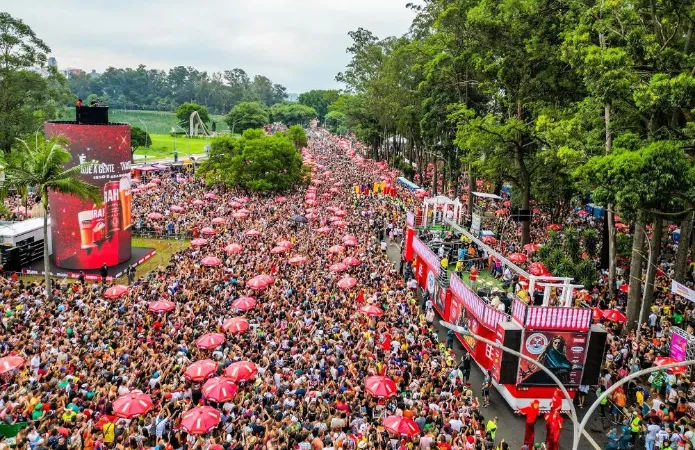
São Paulo hosts one of Brazil’s largest Carnival celebrations, bringing millions of people into the streets across the city. From major organized events to neighborhood blocos, Carnival spreads through different districts, turning avenues, squares, and public spaces into huge open-air celebrations.
The city’s Carnival combines the spectacle of samba school parades with a vast street-party culture. Areas around Ibirapuera and other parts of the city attract large crowds, while megablocos and smaller neighborhood groups fill the streets with music, dancing, and elaborate costumes.
With crowds gathering across multiple parts of the city, São Paulo’s Carnival is defined by its sheer scale and diversity. The combination of major parades, massive street parties, and local celebrations creates a Carnival experience that extends far beyond a single venue.
Pernambuco: Where Frevo Takes Over the Streets
In Pernambuco, the historic cities of Recife and Olinda offer a Carnival shaped by centuries-old traditions. Instead of relying mainly on enclosed venues, the celebration spreads through historic streets, plazas, and colonial neighborhoods.
At the center is frevo, an energetic dance accompanied by fast-paced brass music and colorful umbrellas. Dancers perform rapid steps, kicks, and acrobatic movements, creating one of the most distinctive visual traditions of Brazilian Carnival.
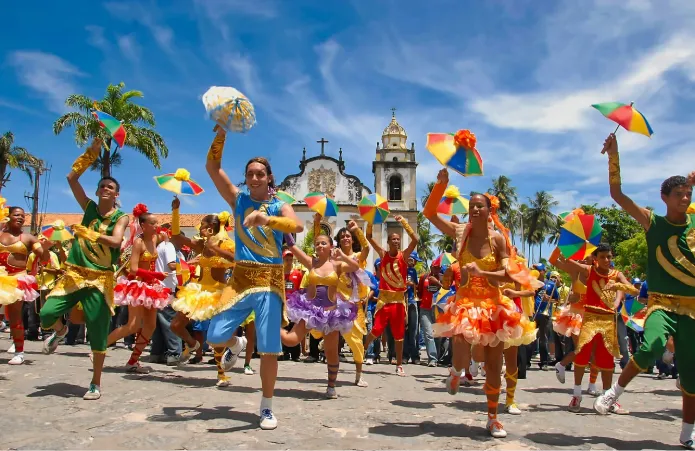
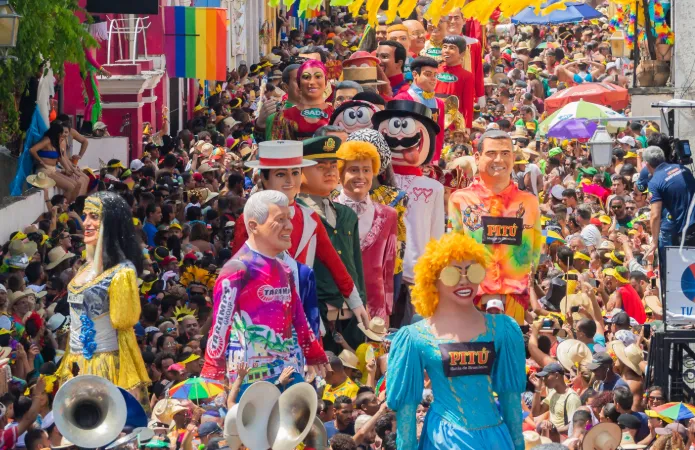
In Olinda, giant puppets parade through the historic streets alongside crowds, adding a playful and theatrical element to the celebration.
In Recife, the Galo da Madrugada is one of the most famous symbols of the local festivities. The massive street parade attracts huge crowds and reflects the open and popular character of Pernambuco’s Carnival.
One Carnival, Many Brazils
These regional celebrations show that there is no single Brazilian Carnival. Rio de Janeiro highlights the discipline and grandeur of samba schools, while São Paulo combines Sambadrome productions with a vast street-party culture.
Salvador transforms its avenues into participatory processions powered by trio elétricos, while Pernambuco places frevo, giant puppets, and historic street celebrations at the center of its festivities.
Together, these traditions reveal the cultural diversity behind Brazil’s most famous celebration and show how each region has developed its own way of experiencing Carnival.
A Celebration of Brazil’s Cultural Diversity
Understanding Brazilian Carnival means looking beyond a single image of samba, costumes, and large crowds. Each destination brings its own history, musical traditions, cultural influences, and community spirit to the celebration.
So, what is Carnival like in Brazil? It is a nationwide celebration shaped by regional identities, music, heritage, and creativity. From the samba schools of Rio and São Paulo to Salvador’s trio elétricos and Pernambuco’s frevo, Carnival reveals the cultural diversity that makes Brazil unique.