



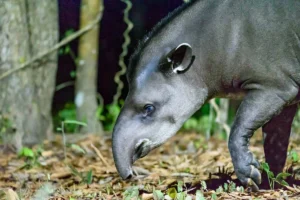
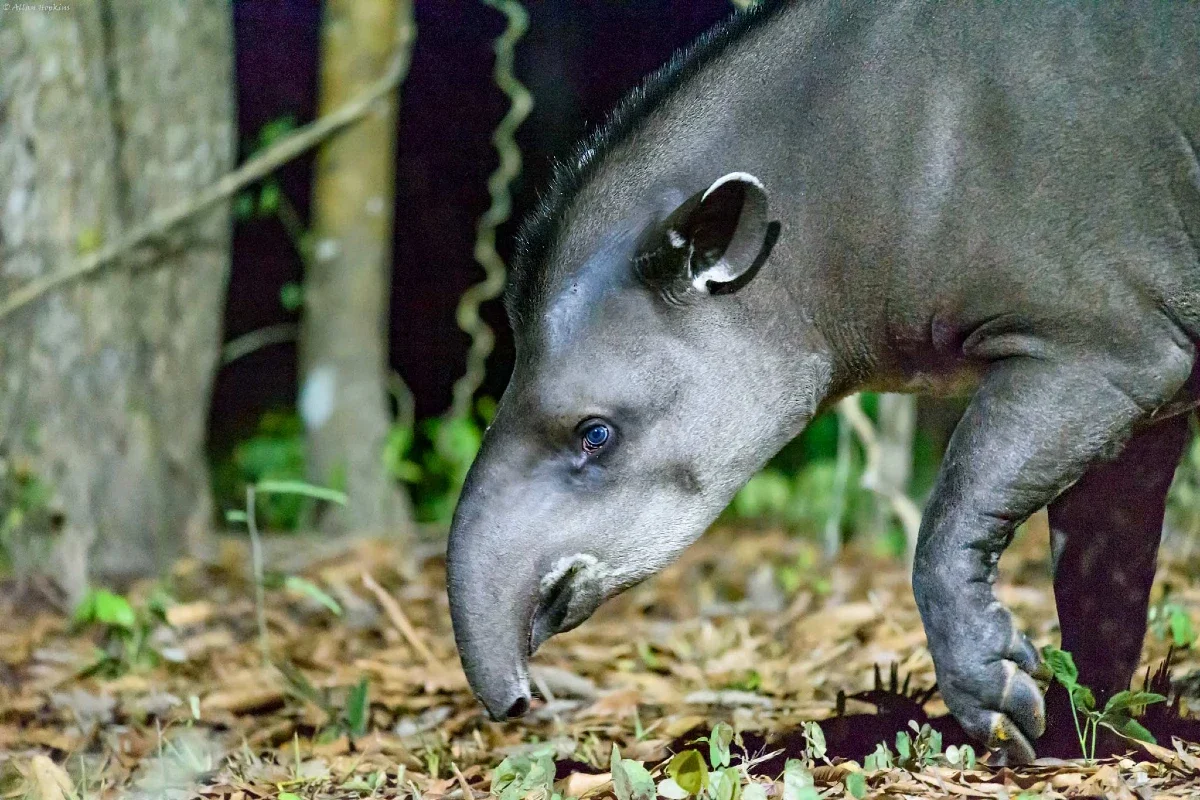
Deep in the forests, wetlands and grasslands of Brazil and other parts of South America lives a remarkable animal with an almost prehistoric appearance. The Brazilian tapir (Tapirus terrestris) is the largest South American mammal, yet its imposing size contrasts with a shy and elusive nature.
From the Amazon rainforest to the Pantanal and other Brazilian ecosystems, the tapir moves quietly through dense vegetation and spends much of its life away from human eyes. Its unusual appearance, gentle behavior and important role in the ecosystem make it one of Brazil’s most fascinating wild animals.
A Giant of the South American Wild
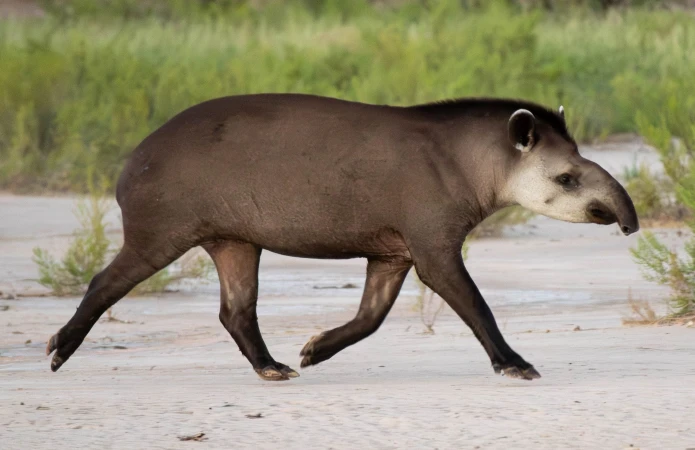
The Brazilian tapir can reach nearly three meters in length and weigh up to 300 kilograms. Its rounded body, short legs and flexible snout give it a distinctive appearance unlike that of almost any other native mammal.
Despite its size, the animal is remarkably discreet. In Brazil, it can move through thick forests and wetlands with surprising ease, often disappearing into the vegetation before it is even noticed.
A Quiet Animal With a Remarkable Way of Living
Tapirs are mostly active during the twilight hours and at night. During the day, they often rest in shaded areas, hidden among dense vegetation.
Their cautious behavior makes encounters in the wild relatively rare. When moving through their territory, they rely heavily on their hearing and sense of smell to detect possible threats.
What Does the Brazilian Tapir Eat?
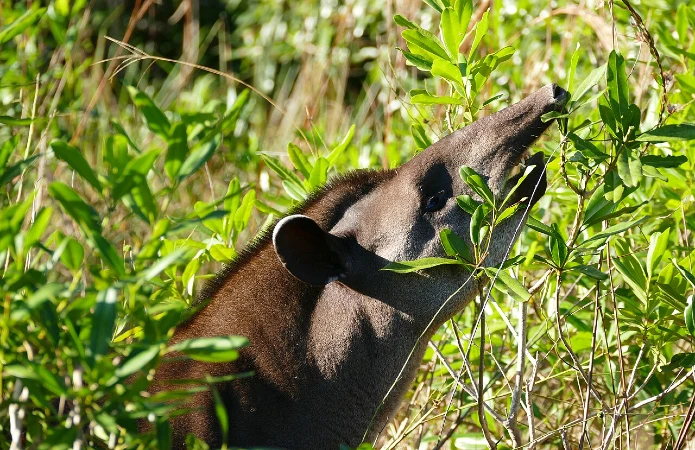
The Brazilian tapir is a herbivore that feeds on a wide variety of plants.I ts flexible snout allows it to pick up leaves, shoots, buds and fallen fruit from the forest floor and low vegetation.
Across Brazilian forests, wetlands and grasslands, it travels through large areas in search of food. By consuming fruits and seeds from many different plants, the tapir contributes to the natural processes that keep these ecosystems healthy.
(See also: Animals of Brazil: 10 Images That Show the Country’s Incredible Wildlife)
A Mammal That Helps Shape the Forest
Tapirs are often called the “gardeners of the forest” because of their role in spreading seeds. After eating fruits, they can carry seeds across considerable distances before depositing them elsewhere through their droppings.
This process helps new plants grow and supports forest regeneration. In Brazil, where vast natural areas still provide habitat for the species, habitat loss, fragmentation and illegal hunting remain important threats.
The Brazilian Tapir Is at Home in the Water
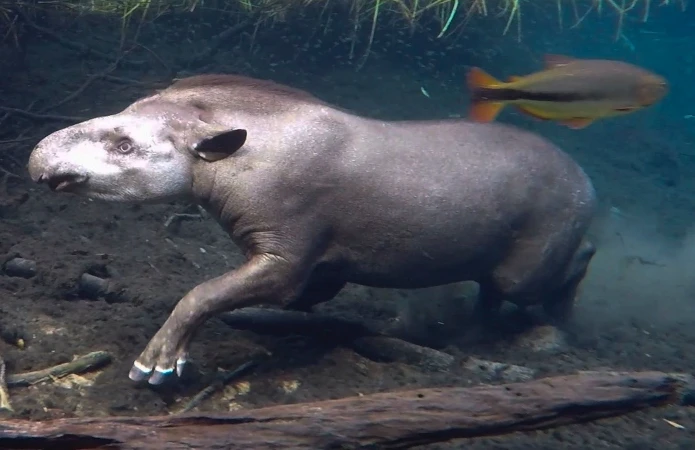
Despite its bulky appearance, the tapir is an excellent swimmer. It frequently enters rivers, lakes and flooded areas to cool down, search for food or escape potential threats.
This ability is especially useful in places such as Brazil’s Pantanal, where water is an essential part of the landscape. The animal can submerge most of its body while keeping its snout above the surface, allowing it to remain hidden when necessary.
A Giant Worth Protecting
The Brazilian tapir combines an imposing appearance with a quiet way of life and an important ecological role. From the Amazon to the Pantanal and other Brazilian habitats, its presence reflects the extraordinary diversity of the country’s wildlife.
As the largest South American mammal, it is also one of the continent’s most distinctive animals. Protecting the species means preserving the forests, wetlands and natural connections that allow these remarkable giants to continue moving through Brazil’s wild landscapes.