





Açaí is much more than a colorful bowl served with fruit and granola. Originating in the Amazon, the fruit has deep roots in Brazilian food culture and has gradually found its way into restaurants, desserts and drinks around the world.
Today, it is often presented as a Brazilian fruit associated with flavor, nutrition and a distinctly tropical identity. But before becoming an international food trend, it was already an important part of everyday life in northern Brazil.
From the Amazonian Fruit to the Table
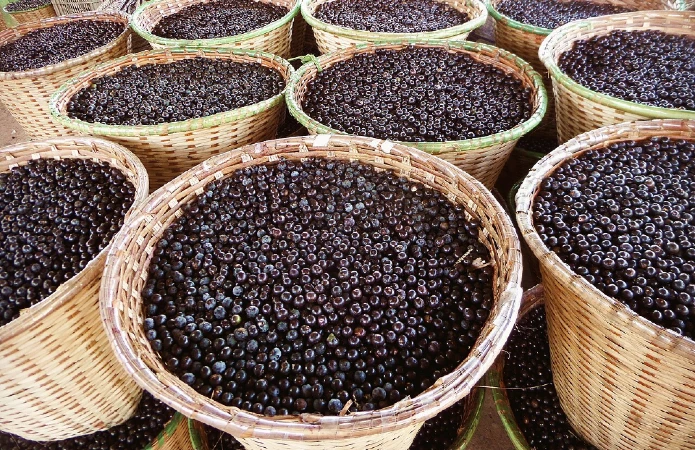
The story begins in the Amazon, where the açaí palm has long been part of local food culture. The fruits are harvested from the palm and processed mainly into pulp, which can then be consumed fresh or used in other preparations.
After harvesting, the fruit goes through a process that separates the edible pulp from the seeds. As demand grew beyond the Amazon, frozen pulp and other processed forms made it possible to take this regional ingredient to other parts of Brazil and international markets.

What Does Açaí Taste Like?
The flavor is distinctive and difficult to compare directly with more familiar fruits. It has earthy and slightly bitter notes, with a mild fruity character that can vary depending on how the pulp is prepared.
Texture is also an important part of the experience. When served cold and blended, the pulp becomes thick and creamy, making it suitable for bowls, desserts and drinks.
Why Is Açaí Important in Brazilian Cuisine?
In the Amazon, açaí is not simply a fashionable dessert. It is a traditional food with a much deeper place in regional cuisine and has historically been part of the diet of local populations.
Outside the North, however, its presentation changed considerably. The same ingredient began appearing in sweet bowls, frozen desserts and other preparations, creating a different gastronomic experience while maintaining its regional identity.
How Is Açaí Consumed in Brazil?
There is no single Brazilian way to consume the fruit. Preparation varies according to region, tradition and personal taste.
- Traditional ways of consuming açaí: In northern Brazil, the pulp is traditionally consumed in ways that can be very different from the sweet bowls popular in other regions.
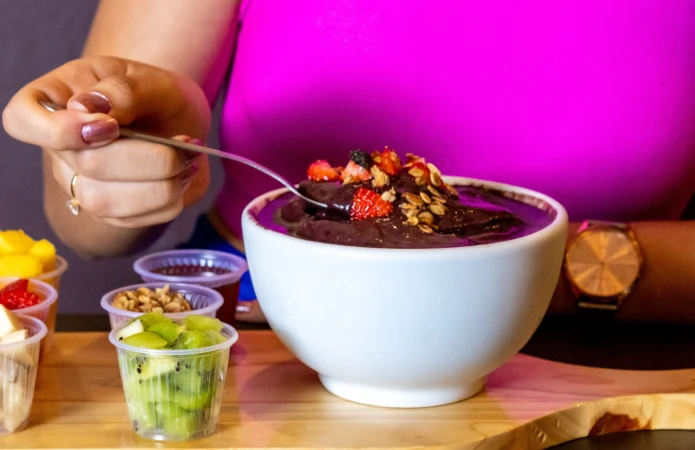
- Açaí bowls and sweet preparations: Outside its traditional context, it became strongly associated with bowls served with fruit, granola and other toppings.
- Açaí in drinks and desserts: The pulp can also be used in juices, smoothies, ice cream and other processed foods.
Açaí Beyond Brazil
As demand increased, the fruit moved from a predominantly regional food into national and international markets. Embrapa records the expansion of frozen pulp consumption in other parts of Brazil as well as in markets such as the United States and the European Union.
Its international success also changed how people encounter the ingredient. In many countries, it appears mainly in bowls, smoothies, juices and desserts, becoming part of a broader global food culture.
(See also: Brazilian Tapir: The Largest South American Mammal)
From a Regional Food to a Global Flavor
Part of the success comes from its versatility. The pulp can be frozen, blended and combined with different ingredients while maintaining its characteristic color and flavor.
Research from Embrapa, Brazil’s government agricultural research agency, has identified the ingredient in several categories of processed foods, including beverages, snacks, desserts, ice cream, dairy products, sweets and candies.
Why Has Açaí Become Popular Around the World?
The intense purple color immediately distinguishes the fruit from many others. That visual appeal helped it gain attention in bowls, desserts and drinks, especially at a time when the presentation of food also influences what people want to try.
The flavor and creamy texture add another dimension to its popularity. Its nutritional profile has also attracted consumers interested in foods associated with natural ingredients and functional qualities.
A Journey Beyond the Amazon
The international market helped transform a regional Amazonian ingredient into one of the better-known Brazilian fruits abroad. This expansion involved traditional production, industrial processing and growing demand for its pulp.
The scale of Brazilian production also reflects the growing importance of açaí to the country’s food industry. As demand expanded, the fruit became part of an increasingly developed production chain involving harvesting, processing, distribution and consumption in Brazil and abroad.
Açaí in Modern Gastronomy
The international journey also changed the role of the fruit in gastronomy. What was traditionally consumed in the Amazon became the base for modern desserts, frozen preparations, drinks and other recipes around the world. The expansion of these new forms of consumption helped create a much larger market around the ingredient.
817.2 thousand tonnes of açaí fruit were produced in Brazil in 2012, according to an Embrapa review. The same research documented the expansion of the ingredient into processed foods and international markets.
That number helps put the journey into perspective. What began as a regional food became part of a much larger production and consumption chain, reaching markets far beyond its Amazonian origins.
What Does Açaí Become?
Once processed into pulp, the fruit can take many different gastronomic forms. It can become the base of a bowl, frozen dessert, ice cream, smoothie or juice.
Its versatility is one of the reasons it fits so easily into different culinary traditions. The preparation changes, but the Amazonian ingredient remains at the center.
What Are the Benefits of Açaí?
The fruit has attracted attention not only for its flavor but also for its nutritional composition. Embrapa describes it as containing proteins, fiber, lipids, minerals and vitamin E, as well as anthocyanins, compounds associated with its dark purple color.
These compounds have antioxidant activity. Still, its nutritional value depends on the preparation and portion consumed. Popular versions can contain significant amounts of sugar, syrups and other ingredients, so the final product is not always equivalent to the fruit itself.
Why Açaí Became a Brazilian Flavor Known Worldwide
Its international journey began with a traditional Amazonian food and expanded through processing, transportation, gastronomy and changing consumer habits. Its distinctive color, flavor and versatility helped açaí adapt to recipes and food cultures around the world.
Yet its global popularity has not erased its regional identity. Behind every bowl or dessert is a fruit deeply connected to Amazonian food culture and a production chain important to Brazil, allowing this Brazilian fruit to carry a small part of that heritage to tables around the world.